How to Change Your Mind About Having a Baby
The effect of childbirth no-i talks virtually
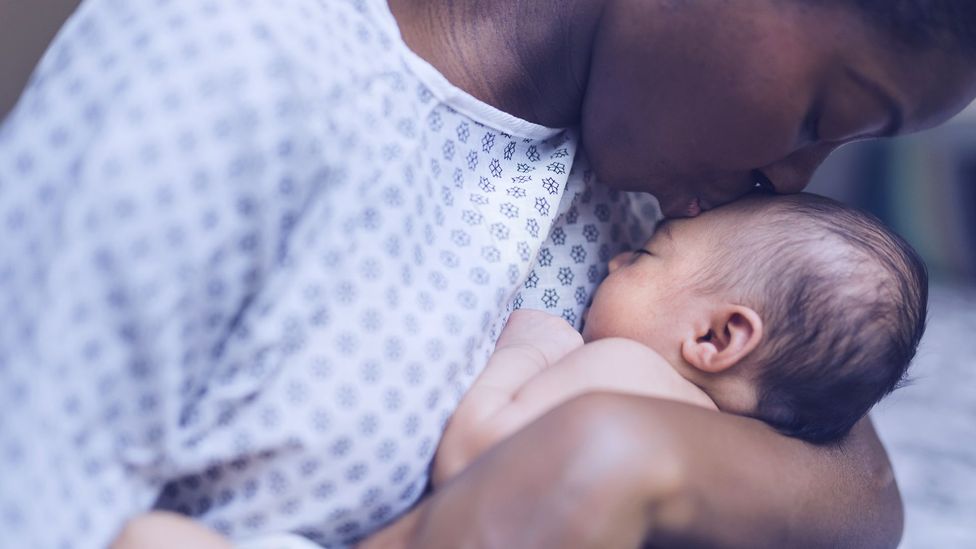
Giving birth can exist one of the most painful experiences in a woman's life, nonetheless the long-term effects that trauma can have on millions of new mothers are still largely ignored.

It's 03:00. My pillow is soaked with cold sweat, my body tense and shaking later on waking from the same nightmare that haunts me every nighttime. I know I'm rubber in bed – that'due south a fact. My life is no longer at risk, but I can't stop replaying the terrifying scene that replayed in my head as I slept, and so I remain alert, listening for any sound in the dark.
This is one of the means I experience post-traumatic stress disorder (PTSD).
PTSD is an anxiety disorder acquired past very stressful, frightening or distressing events, which are often relived through flashbacks and nightmares. The condition, formerly known as "shellshock", kickoff came to prominence when men returned from the trenches of World War I having witnessed unimaginable horrors. More than 100 years later on the guns of that conflict cruel silent, PTSD is withal predominantly associated with war and as something largely experienced by men.
You might also like these other stories in the Wellness Gap:
• Why does dementia hit women harder?
• How menstruation changes the brain
• The painful condition that has no cure
But millions of women worldwide develop PTSD not only from fighting on a strange battlefield – simply also from struggling to requite birth, as I did. And the symptoms tend to be like for people no matter the trauma they experienced.
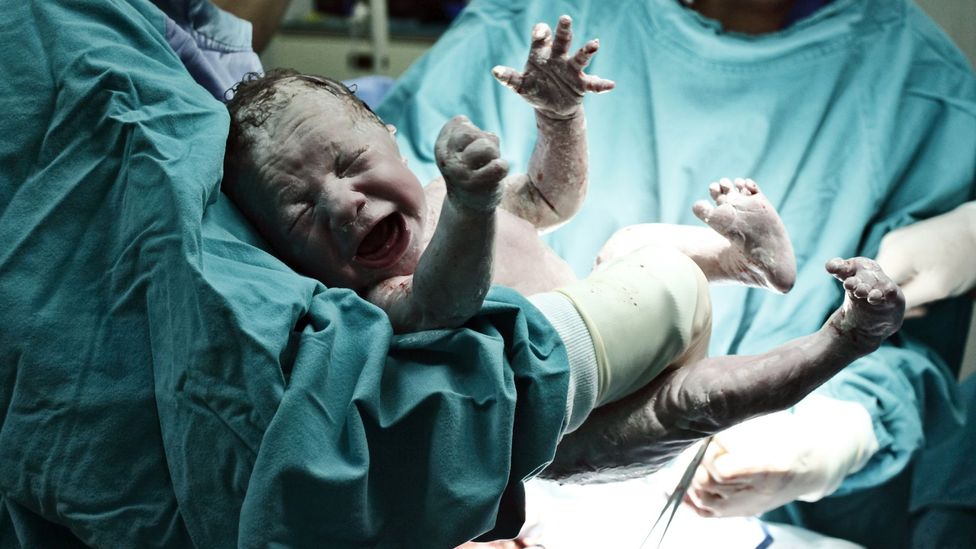
A traumatic delivery can be one of the causes that atomic number 82 women to develop PTSD after they have given birth (Credit: Getty)
"Women with trauma may feel fearfulness, helplessness or horror about their experience and suffer recurrent, overwhelming memories, flashbacks, thoughts and nightmares about the nativity, experience distressed, anxious or panicky when exposed to things which remind them of the event, and avert anything that reminds them of the trauma, which tin include talking about information technology," says Patrick O'Brien, a maternal mental wellness expert at University College Hospital and spokesman for the Royal College of Obstetricians and Gynaecologists in the UK.
Despite these potentially debilitating furnishings, postnatal PTSD was just formally recognised in the 1990s when the American Psychiatry Association changed its description of what constitutes a traumatic event. The association originally considered PTSD to be "something exterior the range of usual man feel", only and then changed the definition to include an event where a person "witnessed or confronted serious physical threat or injury to themselves or others and in which the person responded with feelings of fear, helplessness or horror".
This effectively implied that before this alter, childbirth was accounted too mutual to be highly traumatic – despite the life-changing injuries, and sometimes deaths, women can endure every bit they bring children into the world. Co-ordinate to the Globe Health Organization, 803 women die from complications related to pregnancy and childbirth every day.
There are few official figures for how many women suffer from postnatal PTSD, and because of the continued lack of recognition of the condition in mothers, it is hard to say how common the condition really is. Some studies that have attempted to quantify the problem approximate that 4% of births atomic number 82 to the condition. One study from 2003 constitute that around a third of mothers who experience a "traumatic delivery", defined as involving complications, the use of instruments to assistance delivery or well-nigh decease, go on to develop PTSD.
With 130 meg babies born around the world every twelvemonth, that means that a staggering number of women may be trying to cope with the disorder with footling or no recognition.
And postnatal PTSD might not simply exist a trouble for mothers. Some research has found prove that fathers can suffer it too afterward witnessing their partner get through a traumatic birth.
Regardless of the verbal numbers, for those who go through these experiences, there can be a long-lasting impact on their lives. And the symptoms manifest themselves in many different ways.
"I regularly get vivid images of the nativity in my head," says Leonnie Downes, a mother from Lancashire, Britain, who developed PTSD after fearing she was going to die when she developed sepsis in labour. "I constantly feel nether threat, like I'm in a heightened awareness."
Lucy Webber, another adult female who adult PTSD after giving birth to her son in 2016, says she developed obsessive behaviours and become extremely broken-hearted. "I'thou non able to permit my baby out of my sight or allow anyone touch him," she says. "I have intrusive thought of bad things happening to all my loved ones."
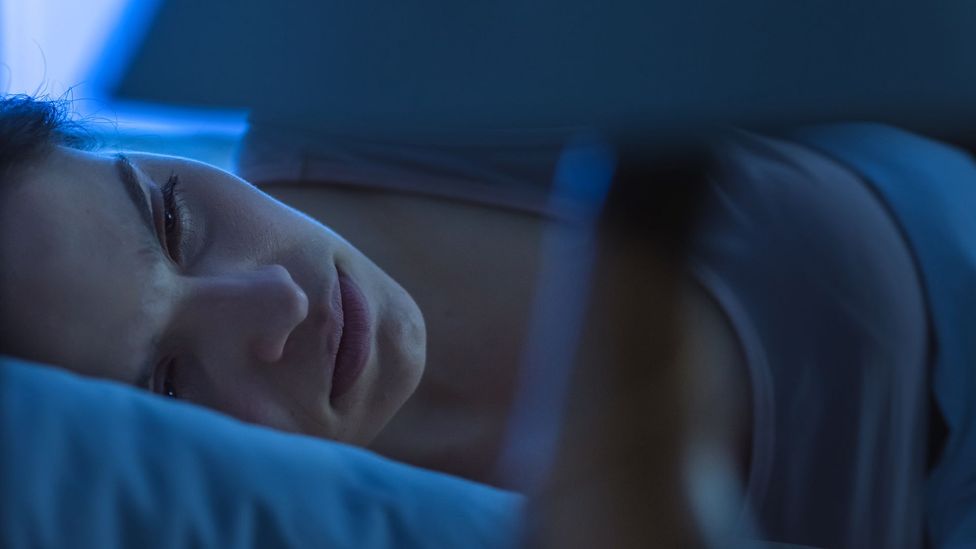
Nightmares that crusade women to relive the fearfulness, pain and helplessness they felt during childbirth are a common symptom of postnatal PTSD (Credit: Getty)
Non all women who accept difficult births will develop postnatal PTSD. Co-ordinate to Elizabeth Ford of Queen Mary University of London and Susan Ayers of the Academy of Sussex, it has a lot to exercise with a woman's perception of what they went through.
"Women who feel lack of control during nativity or who have poor intendance and support are more at risk of developing PTSD," the researchers write.
The stories from women who have developed PTSD afterward giving birth seem to reflect this.
Stephanie, whose proper name has been changed to protect her identity, says she was poorly cared for during labour and midwives displayed a lack of empathy and compassion. A peculiarly difficult labour saw her being physically held downwardly by staff every bit her son was delivered. "He was born completely bluish and taken abroad to be resuscitated and I was given no information on his condition for hours."
Emma Svanberg, a chartered clinical psychologist who is involved in the Make Births Better Entrada, says this is a common theme from the women she hears from.
"The gene which we hear virtually time and time again is lack of kindness and compassion from staff," she says.
A study by researcher Jennifer Patterson, at Napier University in Edinburgh, suggests that while midwives are often enlightened that giving nascency tin exist traumatic for women, they are ofttimes so busy they struggle to offering adequate back up and information to mothers who may exist at hazard of PTSD.

Giving busy nursing and midwifery staff more time to intendance for mothers who accept been through a traumatic birth could assist to foreclose PTSD (Credit: Getty)
Certain groups of women are also more likely to develop postnatal PTSD even before they give nascence.
"For women who have a history of prior trauma – perhaps victims of sexual abuse in childhood, those who accept previously had PTSD, or low or anxiety – the risk of developing PTSD is significantly higher. They're five times more than likely," says Rebecca Moore, a perinatal psychiatrist working for the NHS in Due east London.
Postnatal processing
The claiming of PTSD resides in the encephalon. Usually, memories are filed away in the encephalon's hippocampus. But if an feel is traumatic, the mind goes into fight-or-flight fashion and the function of the encephalon associated with fear, the amygdala, switches on. This causes memories to go stuck in this primitive part of the brain rather than beingness safely filed away.
It also means that when something reminds a female parent of her experience – such equally seeing nascence depicted on TV or beingness in a hospital – the traumatic memories feel less like memories and more like the adult female is still in imminent danger, triggering concrete reactions like panic attacks or flashbacks.
This broken filing system means "you get a kind of looping of the memory in the mind all the time", Moore explains.
It may cause structural changes in the brain as well. Researchers at the Academy of California studied the brains of 89 current or former members of the military with PTSD using brain scans to measure out the volume of various parts of the brain. It showed that the right amygdala in the brains of armed forces-trained individuals with PTSD were half-dozen% larger than their peers. The right-manus part of the amygdala is particularly associated with controlling fearfulness and disfavor to unpleasant stimuli.
"We wonder if amygdala size could be used to screen who is most at take chances to develop PTSD symptoms subsequently a mild traumatic brain injury," says Joel Pieper of University of California, San Diego, who was one of those who led the study.
Millions of women may suffer from postnatal PTSD every year, but stigma surrounding the status may lead many to endeavor to hibernate how they are feeling (Credit: Getty)
Whether like changes occur in the brains of women with postnatal PTSD is not yet known, simply information technology could offer a way of diagnosing those who are affected. The complex mixture of symptoms experienced past women with PTSD after birth tin frequently lead to delays and even misdiagnosis.
Another issue standing in the mode of diagnosis is the stigma attached to the condition. Some women experience uncomfortable speaking openly virtually information technology for fright of being seen as a failure as a mother, or of seeming ungrateful for their babe.
Svanberg believes nativity trauma is a feminist issue. "There is a huge torso of enquiry on the disbelief of women's pain, particularly marginalised women, and often women's voices are silenced," she says. Many experts agree that women are but not listened to or given the data they demand to make the all-time decisions for themselves and their family. (Read more about how women's pain is more likely to be dismissed than men'southward).
"Giving women the facts well-nigh unlike modes of delivery while they are meaning isn't scary, it'south empowering," adds Moore. "Women are capable of making upwardly their own minds, but rarely are they properly informed well-nigh risks and handling when it comes to nascency."
She believes the problem is more than of a societal i. "Women are often treated like princesses when they are pregnant, but one time the baby is born, it's all well-nigh the baby," she says. "Information technology's not uncommon for new mothers suffering with mental affliction to hear 'You've got a good for you babe, why are you complaining?' And it'due south and so even more difficult for women to pluck upwardly the backbone to inquire for assistance."
It's thought that one-half of women with perinatal mental wellness problems won't exist treated.
"In that location'south still shame in seeking assistance and women struggling often fearfulness they will exist judged and criticised," says Moore.

Postnatal PTSD tin can led sufferers to push abroad their partner at the fourth dimension they needed them most (Credit: Getty)
Attempting to continue her condition hidden in this way started to harm Stephanie's relationships with her hubby and her older daughter. Her own PTSD manifested as hyper-vigilance, leaving her in a permanent and exhausting state of existence alert and expecting the worst.
"I knew I wasn't OK only kept it hidden for months," says Stephanie. "I wasn't eating or sleeping. I refused to allow anyone wait after my son. My other children relied on their dad every bit I was as well focused on my infant.
"My relationship suffered with my daughter, who was just two. I lost all my conviction in my parenting ability when I was always at-home and went with the menstruum before. I pushed my husband and family abroad."
A written report led by the Academy of Sussex confirmed women with postnatal PTSD reported negative effects on their human relationship with their partner, including sexual dysfunction, disagreements and blame for the events surrounding the nascency. The mother-baby bail was besides seriously affected.
Nearly all women involved in the research reported initial feelings of rejection towards their baby and while this changed over time, the study ended that childbirth-related PTSD tin can accept "astringent and lasting" effects on women and their relationships.
For others, it is their career that suffers.
"PTSD has inverse my whole life," says Leonnie Downes, who used to work for the Northward Due west Ambulance Service. "I had a adept career, and I've had to leave my job to go cocky-employed only so I tin work from dwelling. My wife has had to leave her job too and has go my registered carer. I'yard now registered disabled and for the first time ever, we now have to live off inability benefits."
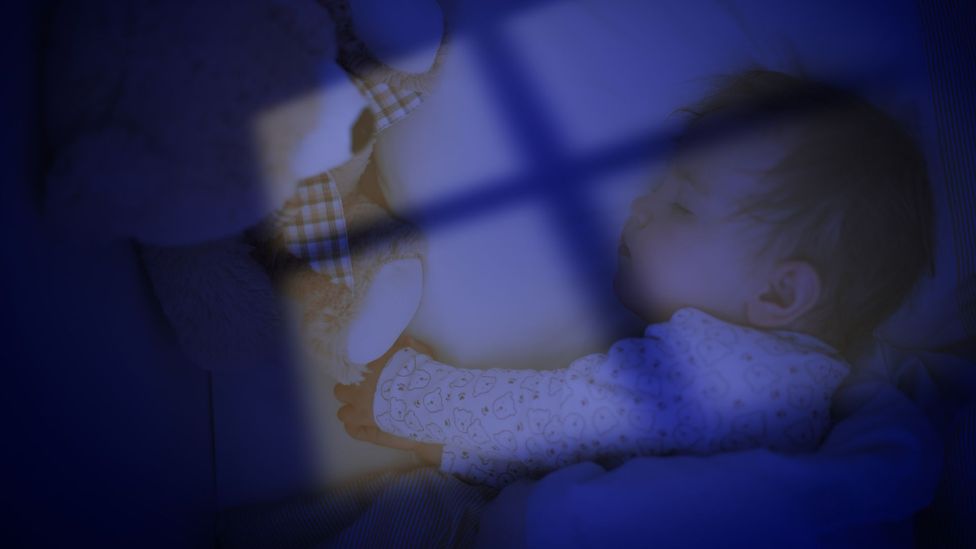
Some mothers with postnatal PTSD discover themselves struggling with exhuasting levels of hyper-vigilance where they feel they cannot leave their baby unattended (Credit: Getty)
Moore says she regularly meets women who are also traumatised to return to piece of work, including paramedics and midwives.
Lucy Webber is ane such midwife. "I quit considering I couldn't cope with non being able to give women the support they need," she explains.
Simply there is help available for women who are struggling with postnatal PTSD, provided they are able to admission it. Handling typically takes the form of medication or cognitive behavioural therapy (CBT) – a talking therapy designed to change the manner someone thinks and behaves. Eye motility desensitisation and reprocessing (EMDR) can also be used, which sometimes involves borer or music to help a patient's brain remember they are in the present, not trapped in the moment of their flashback. Research also has shown that transcendental meditation can assistance war veterans with PTSD.
"Birth trauma is not that difficult to treat, but it is very difficult for women and partners to access appropriate back up," Svanberg says, alarm that many women are misdiagnosed equally having post-natal depression (PND) – another debilitating condition that can follow the birth of a child, just 1 with a unlike fix of symptoms. In the United kingdom of great britain and northern ireland, it tin exist hard to access treatment in some areas on the NHS, while in other countries, including the Usa, information technology can be prohibitively expensive.
But many people believe that mitigation is the respond and that ameliorate grooming for midwives and obstetricians could prevent women developing PTSD in the kickoff identify.
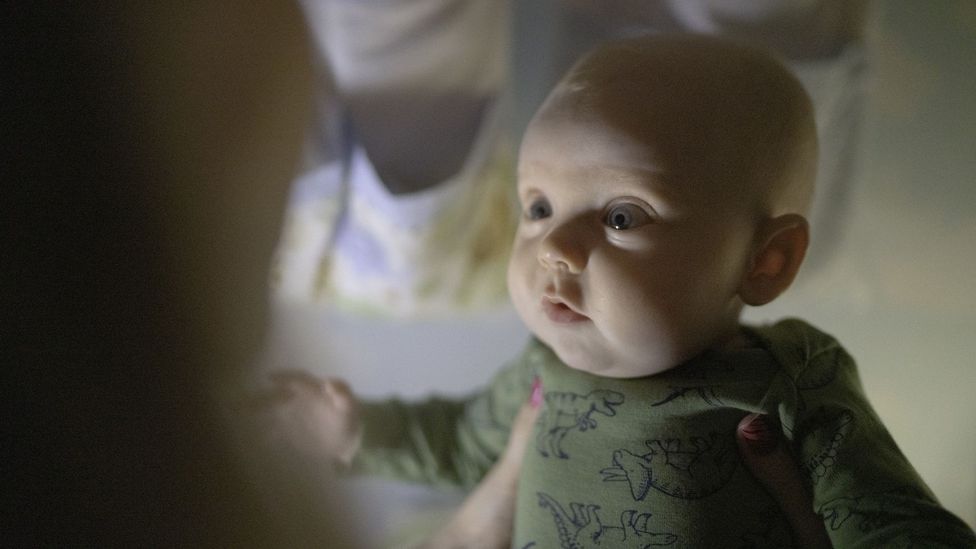
Wider acceptance of postnatal PTSD could help to ensure time to come generations of mothers can enjoy their new baby as a approval (Credit: Getty)
"The whole system contributes to trauma," Moore says. "Often women are being cared for by frontline staff, who are doing their job but not with much compassion, considering they are burnt out." The Make Births Better campaign focuses on offering training to medical professionals in an effort to tackle this. Small changes that cost nada, such as using kind language and less jargon, can make all the difference in stopping women developing physical and mental problems every bit a outcome of giving birth.
Most women would agree that giving birth is a defining and transformative event. And with the correct support, good can even come from the most traumatic of births.
Lucy Webber says her feel has helped her become a gentler parent and Stephanie has even decided to get a midwife.
Well-nigh ii years on, my ain life is gradually getting easier, but I approach my girl's birthday with a mixture of excitement and trepidation because of the memories and physical reactions it will undoubtedly trigger. She is the best gift I could ever promise for and her birthday will also exist a celebration of how far nosotros take come up since her arrival.
Besides the little toy guitar we will be giving her, perhaps the all-time souvenir I tin can offering is to play my own modest part in challenging the norms of what it is to give birth and be a female parent, so birth trauma and postnatal PTSD can be dealt with in the open.
--
This story is part of the Health Gap , a special series about how men and women experience the medical system – and their own health – in starkly different ways. Practise you take an experience to share? Or are you just interested in sharing information well-nigh women's wellness and wellbeing? Bring together our Facebook group Time to come Woman and be a part of the conversation about the solar day-to-twenty-four hour period issues that bear on women'south lives.
Bring together one million Hereafter fans by liking united states of america on Facebook, or follow the states on Twitter or Instagram.
If you liked this story, sign upward for the weekly bbc.com features newsletter, called "If You Just Read 6 Things This Week". A handpicked selection of stories from BBC Future, Culture, Capital, and Travel, delivered to your inbox every Fri.
Source: https://www.bbc.com/future/article/20190424-the-hidden-trauma-of-childbirth
0 Response to "How to Change Your Mind About Having a Baby"
Publicar un comentario